
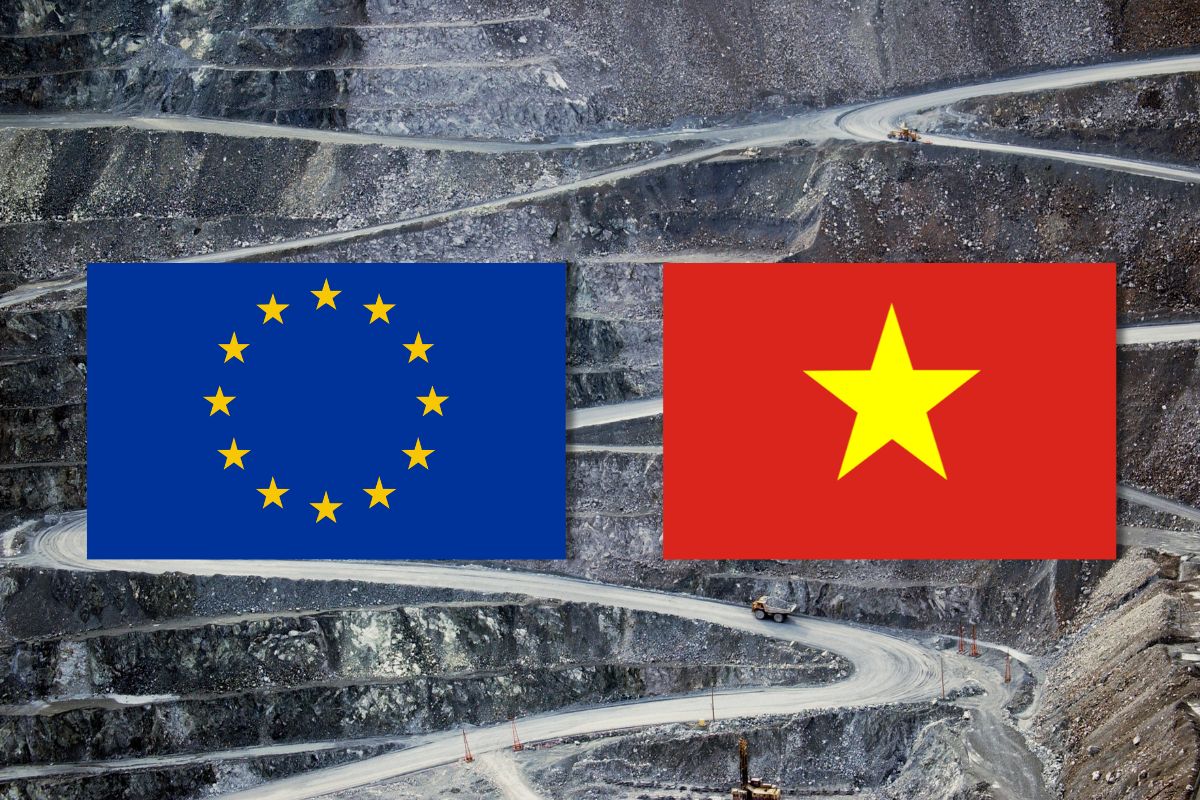
The Southeast Asian country is a major producer of tungsten and holds large, still largely untapped reserves of other critical minerals such as rare earths.
The European Union and Vietnam are already linked through several forms of cooperation, including a free trade agreement. Now, both sides aim to further deepen their political and economic ties. A corresponding declaration was signed on Thursday in Hanoi by senior government representatives. In addition to semiconductor supply chains and energy, the planned cooperation also covers critical minerals. According to the joint statement, the focus will be on promoting the sustainable extraction and processing of these materials.
Vietnam possesses substantial deposits of various raw materials. Although mining currently contributes only around three percent to its gross domestic product and is largely of regional importance, the extraction of critical minerals in particular is set to expand significantly in the future.
Even today, Vietnam produces several raw materials (PDF) that are important to numerous European industries and, in some cases, are classified as critical by the EU. The country is among the most important suppliers of tungsten outside China, a hard metal that is indispensable for many civilian and military applications. In addition, Vietnam is a major producer of bauxite, the primary raw material for aluminum production, and a major source of gallium. This portfolio is complemented by smaller quantities of bismuth, fluorspar, antimony, and manganese.
Large Rare Earth Deposits, Limited Mining
Vietnam’s rare earth deposits are also among the largest known, although the U.S. Geological Survey significantly revised its estimates downward last year. In 2023, the Vietnamese government announced plans to sharply increase rare earth production. Several companies are already integrated into global supply chains. Vietnam is also seeking to strengthen downstream segments of the value chain. To this end, the country has, among other measures, banned the export of unprocessed rare earths and initiated cooperation with global market leader China as well as partners from Australia. Refined products are intended in particular to support the rapidly growing domestic electric vehicle market.
More on the EU and Its Raw Material Supply Chains: Against the backdrop of rising geopolitical tensions and a reconfiguration of global trade relations, the EU is increasingly seeking new partnerships. Alongside Vietnam, countries such as India and states in South America are also coming into focus.
Photo: Fertnig, Firma Saputra, Route 66 via Canva, Montage rawmaterials.net