
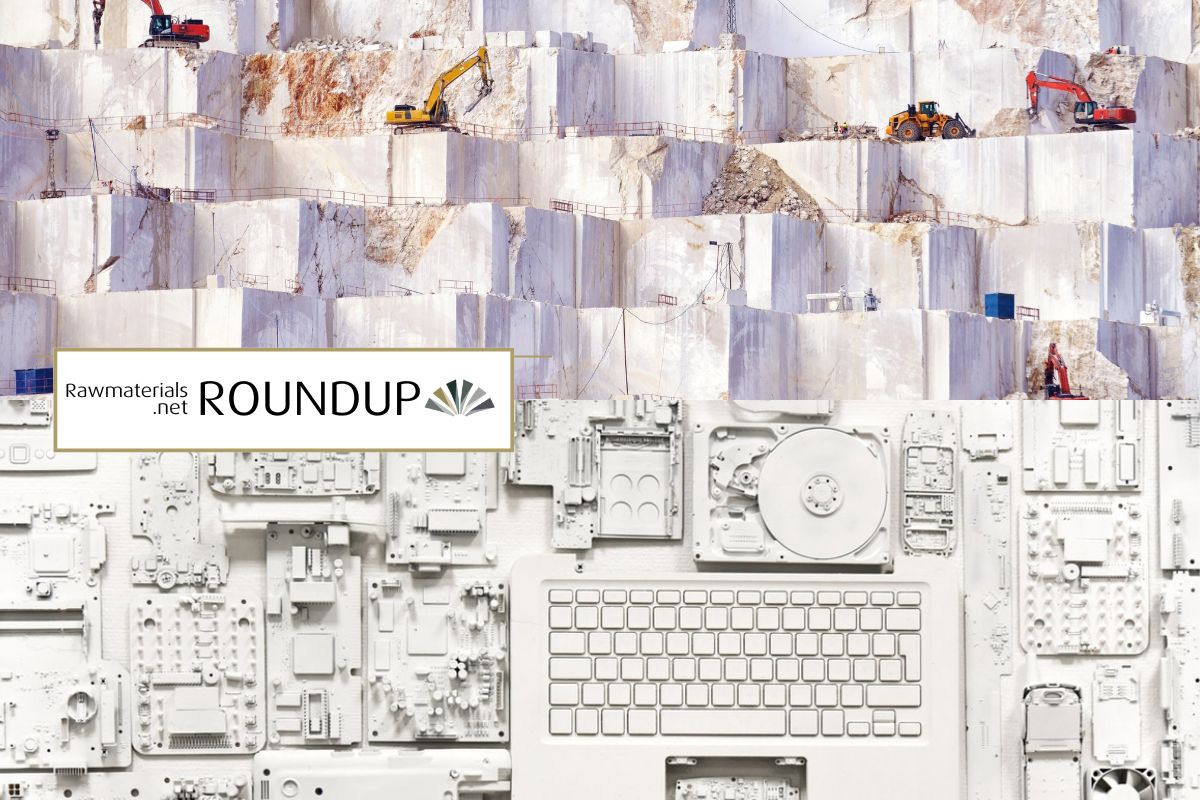
This week, global moves to secure and regulate critical minerals dominated the headlines. Norway extended its deep-sea mining moratorium until 2029, while China’s new export controls continue to disrupt European supply chains. Meanwhile, the U.S. Department of Energy announced $134 million to fund a rare earth demonstration plant, and India pushes forward with domestic rare earth magnet production.
€3 Billion for Raw Material Projects: EU Commission Unveils RESourceEU
The European Commission on Wednesday unveiled RESourceEU, a plan to secure the bloc’s supply of raw materials. The strategy’s main component is a concrete funding commitment. Over the next twelve months, roughly €3 billion will be made available to support key projects designated as strategic under the EU Critical Raw Materials Act.
To the article
German Raw Materials Fund Kicks Off by Backing Lithium Project
Germany’s raw materials fund has now begun operating in practice, with its first round of financing going toward lithium extraction. In the initial phase of its project, Vulcan Energy plans to produce 24,000 tonnes of lithium hydroxide monohydrate (LHM) per year, enough for around 500,000 electric-vehicle batteries, according to the company.
To the article
U.S. DOE Announces $134 Million for Rare Earth Demonstration Facility
The Department of Energy has released a $134 million funding opportunity to build and operate a rare earth element demonstration plant. The facility must process unconventional feedstocks, such as acid mine drainage, mine waste, deleterious materials, or e-waste, and produce separated rare-earth oxides and refined metals, with emphasis on heavy rare earths, for which the U.S. is fully import-dependent.
To the article
Critical Raw Materials: Japan Seeks Cooperation with Saudi Arabia
Japanese Prime Minister Sanae Takaichi has advocated closer collaboration between Japan and Saudi Arabia on rare earth elements. She highlighted that heavy reliance on a small number of producers has created significant supply risks. The Saudi kingdom has been working to diversify its economy and reduce dependence on oil exports.
To the article
Norway Suspends Deep-Sea Mining Until at Least 2029
Deep-sea mining in Norwegian waters is suspended until at least 2029, as the government agrees to halt all licenses. Environmental groups and fishermen welcome the move due to limited knowledge of its ecological impact, echoing global calls for a moratorium.
To the article