
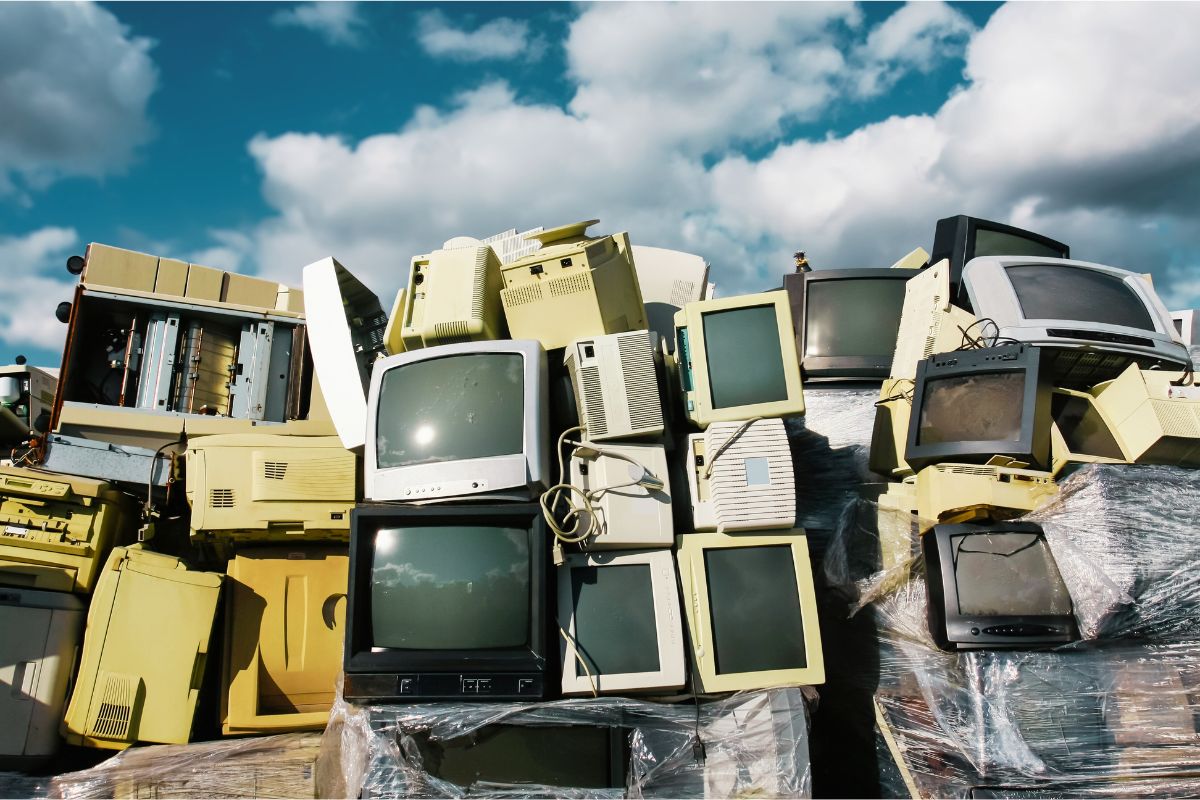
Researchers want to close a critical gap in the circular economy and use the critical materials in e-waste to support U.S. national security and economic resilience.
The amount of electronic waste continues to grow year by year. This not only poses environmental hazards but also weakens the supply of raw materials. Discarded devices contain valuable resources such as rare earths, lithium, and precious metals—resources that many countries are aiming to produce domestically to reduce import dependence. Around the world, governments are therefore seeking to increase recycling and backing these efforts with financial support. So far, however, hurdles like high processing costs and regulatory uncertainties have slowed progress.
Researchers at the University of Houston in Texas have now developed a supply chain model designed to make large-scale recycling significantly more profitable for private industry. According to lead researcher Professor Jian Shi, the current system is expensive and complicated: a fragmented network of manufacturers, independent collectors, and material processing companies often operates inefficiently.
New Model Turns Competitors Into Recycling Partners
The study, funded by the U.S. Department of Energy, demonstrates how competitors could instead become partners and how profits could be distributed more fairly. The model incorporates consumer behavior, regulatory incentives, and market competition. The researchers concluded that subsidies alone are not enough to make the circular economy efficient; additional targeted incentives for companies and region-specific policy support are required, as simulations for Sub-Saharan Africa, wealthy industrial nations, and emerging Asian economies show.
Compared to the baseline scenario, the model shows clear financial benefits for electronics manufacturers, partly because they can take back and process e-waste themselves rather than relying on retailers or third parties. Recycling volumes would also increase slightly, and collection points could nearly double their earnings if costs are shared. Most importantly, critical materials could be kept in the U.S., benefiting national security and the economy instead of ending up in foreign landfills, Shi emphasizes.
More on the topic: Innovative new approaches to e-waste recycling are showcased each year at the E-Waste World trade fair in Frankfurt, Germany. Rawmaterials.net was on site.
Photo: PN_Photo via Canva