
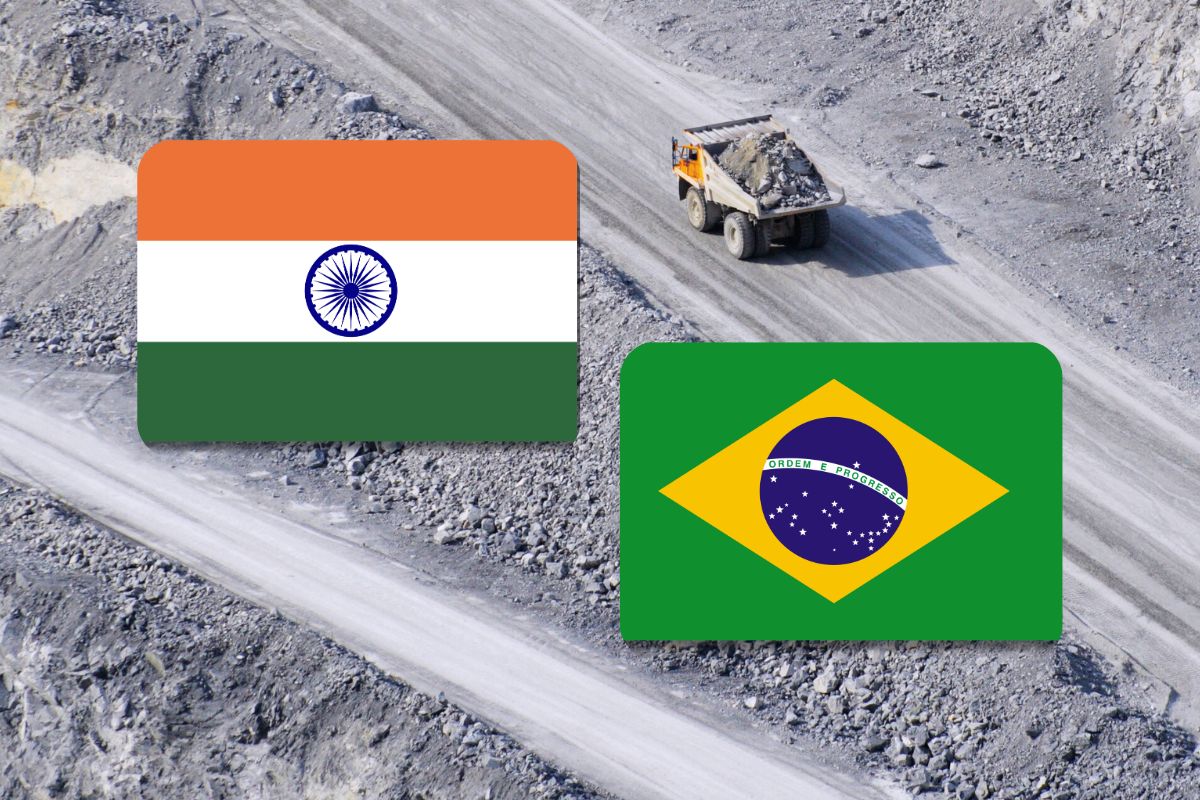
Both countries possess enormous reserves of these critical minerals and aim to benefit much more from their resources.
India and Brazil have signed an agreement to strengthen cooperation on critical minerals, including rare earths. The pact is intended to help establish new, resilient supply chains, Indian Prime Minister Narendra Modi said while hosting Brazilian President Luiz Inácio Lula da Silva for a three-day state visit. During the meeting, additional agreements were also signed in strategic sectors such as energy, climate action, artificial intelligence, and semiconductors.
The partnership between the two BRICS nations comes against the backdrop of increasing geopolitical tensions that are destabilizing existing trade structures. Many economies are pursuing new strategic partnerships, partly to reduce their heavy reliance on critical minerals from China – another BRICS member. At the same time, both India and Brazil are affected by U.S. trade policy.
Partnership holds potential, but China remains the dominant player
The new cooperation offers potential in the rare earth sector, but whether it can curb China’s dominance in the long term remains uncertain. According to estimates by the U.S. Geological Survey, Brazil holds the world’s second-largest reserves of rare earths, after China. Last year, the U.S. geological service reported India as having the third-largest reserves; no data were available for 2026.
Both countries currently exploit only a small portion of their vast reserves. Processing capacities are even more limited, though initial pilot projects exist. India aims primarily to supply its emerging domestic production sector with homegrown resources and reduce import dependence, while Brazil positions itself as a potential alternative supplier to China.
At the same time, Brazil significantly increased its rare earth exports to China last year and remains partially dependent on the country for building its own refining capacity. China holds a massive lead in the technologies required for separating and processing these minerals and protects its know-how not least through export restrictions. Brazil has recently launched new targeted partnerships with Western companies, such as the Canadian company Ucore Rare Metals, but establishing a fully-fledged downstream rare earth industry is still expected to take many years.
Photo: AlexKontz, Hanna Olekseichuk, Viktorcvetkovic, via Canva, Montage Rohstoff.net