

Since April 2025, China has upheld strict regulations on the export of dysprosium, terbium, and other rare earth elements. As a result, less material is reaching international markets, as reflected in the latest export statistics for January and February. Compared to the previous year, dysprosium exports fell by almost 75 percent in January, totaling just 6,182 kilograms. Vietnam was the largest recipient, followed by South Korea and Estonia. Notably, no shipments were recorded in February.
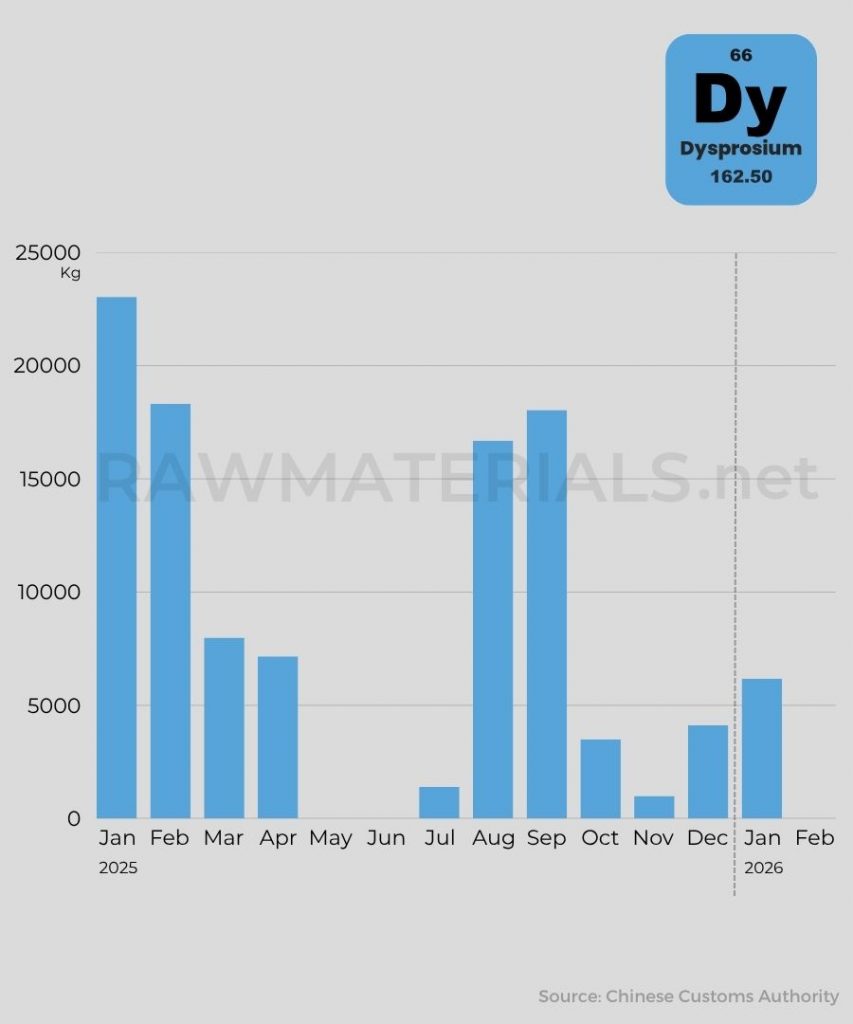
Chinese dysprosium exports
Terbium exports also declined compared to January 2025, dropping nearly 35 percent. In February, only 500 kilograms were exported, representing an 87 percent decrease year-on-year. In January, South Korea received the majority of terbium exports, followed by Vietnam, Estonia, and Germany. By February, Estonia was the sole recipient, with a value chain for rare-earth magnets currently in development.
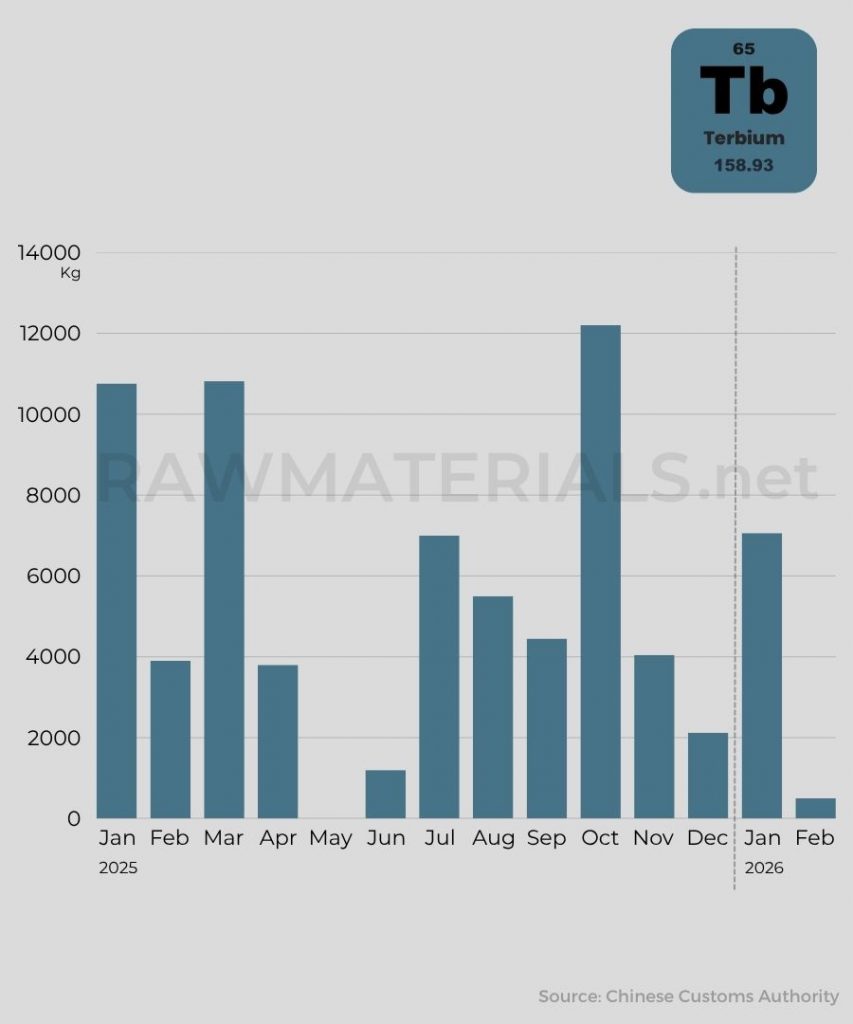
Chinese terbium exports
Both dysprosium and terbium are critical for enhancing the performance of high-strength magnets. Interestingly, Japan did not appear on the recipient list in either month. At the beginning of the year, the Chinese government tightened export controls on dual-use goods to Japan, likely in response to escalating political tensions. These regulations, primarily targeting Japan’s defense sector, could now also affect the broader high-tech industry.
Photo: iStock/ake1150sb